
1A practical guide to security, prevention and peace of mind in everyday life
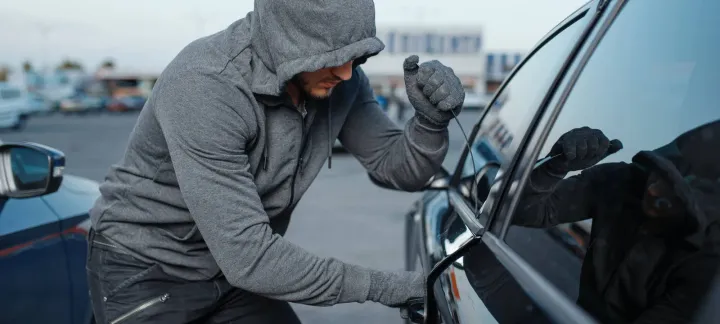
For many people, the car is one of their most valuable possessions. It is not just a means of getting around, but part of everyday life, work, family and free time. And yet, in most cases, the car remains the least protected “property” we own.
We leave it:
- in an outdoor parking space
- in front of the building
- on a dark street
- in a public car park
Often with the thought: “It's quiet here” or “Just for a few hours”.
It is precisely this moment of underestimation that makes the car vulnerable.
This article is not meant to create fear, but to give a clear, practical framework for reducing the risk of theft or damage to your car when it is parked.
2Why the parking space is the riskiest moment
Most people associate car theft with movement, chases, complex schemes. In reality, the largest share of thefts and attacks happen when the car is stationary.
The reasons are logical:
- the car is left unattended
- time works in the offender's favour
- there is no immediate reaction
- the environment is often predictable
The parking space is the point where the owner's routine meets the offender's patience.
3A real-life story: “I've parked there for years”
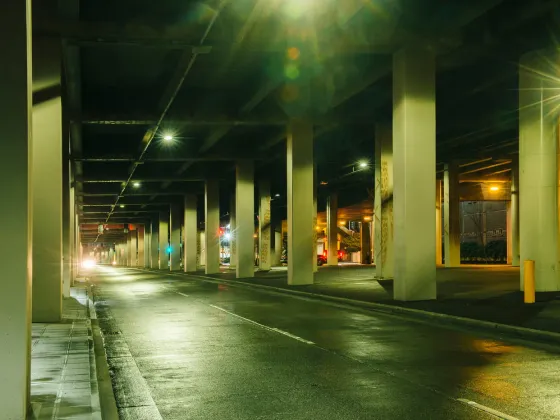
A common scenario:
“I've parked in this spot for 8 years. There was never a problem. One morning I went out and the car had been broken into. Not stolen – just broken into, things were missing.”
This is a typical example of a false sense of security that builds up over time. The more routine a place looks, the easier it becomes to watch.
4What are the real threats to a parking space?
It is important to distinguish the types of risk, because protection against each is different.
1. Theft of the entire car
Rarer, but with serious consequences.
2. Theft of items from the car
The most common form:
- bags
- tools
- electronics
- documents
3. Vandalism
Smashed windows, scratches, deliberate damage.
4. Theft of parts
Headlights, mirrors, wheels, catalytic converters.
5The most common mistakes that make theft easier
Before we talk about solutions, let's be honest about the mistakes.
- items left in plain sight
- lack of lighting
- parking “wherever there is space”
- relying only on the factory alarm
- no habit of checking
These mistakes do not guarantee theft, but they significantly raise the risk.
6The core principle: prevention is stronger than reaction
The most effective protection is not the one that catches the offender, but the one that gives them no reason to act in the first place.
The car should look:
- hard to access
- watched
- an unsuitable target
7Lighting – the first line of defence
The most underestimated factor.
A car parked:
- in a well-lit area
- near an entrance or cameras
- in a visible place
is significantly less likely to be targeted.
If you have a choice – always choose the light.
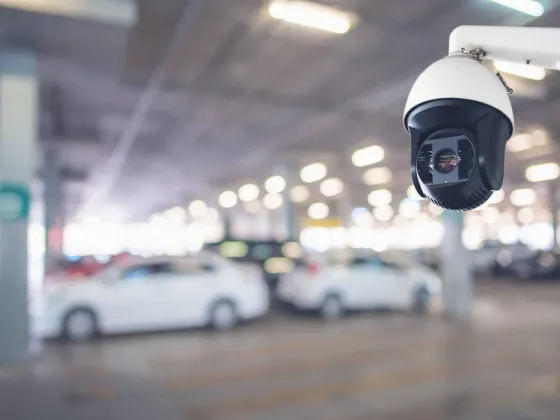
8Cameras and video surveillance – the deterrent effect
Video surveillance is not only for providing evidence after the event. It is a strong psychological factor.
Cameras:
- change behaviour
- reduce impulsive acts
- steer offenders towards easier targets
It is important that they are:
- visible
- correctly positioned
- actually working
9The alarm – useful, but not enough
Factory alarms are standard, but they are not a cure-all.
They:
- can be ignored
- often go off falsely
- do not always lead to a response
The alarm should be part of a system, not the only protection.
10Physical habits that make a huge difference
Some of the most effective measures cost nothing.
- always lock up
- check twice
- do not leave items on the seats
- do not be predictable (the same place, the same time)
These habits seem elementary, but they work.
11The strong but often overlooked element: the car's interior organisation
Here we come to something that is rarely discussed but has a direct impact on the risk of theft.
A car that:
- is messy
- has bags and items in plain view
- gives the impression of “something valuable inside”
is a much more attractive target, even if there is actually nothing expensive in it.
Good internal organisation:
- hides the contents
- reduces temptation
- makes the car “uninteresting”
In this context, practical car accessories for organising and tidying have a direct role in security, not just in convenience.
Organisers, covers, and boot and interior solutions let items be put out of sight, without chaos and without improvisation. This is especially important for people who carry tools, equipment or personal belongings in their car every day.
Many drivers discover such solutions while looking not just to tidy their car but to make it less vulnerable.
An example of a place where you can look at practical accessories for organising and protecting your car is AccessBG – as part of an overall approach to security, not as a purchase for its own sake.
12The parking space as part of home security
Many people invest in home security, but forget that:
- the car is part of the perimeter
- the parking space is an extension of the property
- protection must be comprehensive
The camera, the lighting and your habits must work together.
13Differences between an outdoor and a covered parking space
Outdoor parking space
- greater visibility
- greater vulnerability
- lighting matters more
Covered car park
- a false sense of security
- often no cameras
- fewer people, but more time to act
In both cases prevention is key.
14The most common myths about theft
- “This only happens to expensive cars”
- “It's quiet here”
- “If it happens, I'll find out who did it”
Myths do not protect.
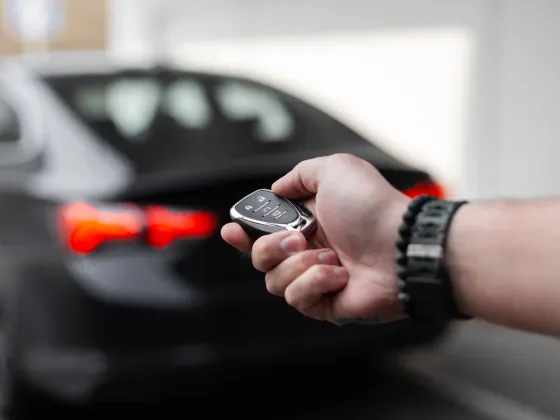
15Access control – an underrated factor
A barrier, a chip, a remote control – these are small things that:
- restrict movement
- reduce casual access
- increase control
The fewer “random” people pass through, the better.
16How to think like the offender (without becoming one)
A useful exercise:
- Which car would I choose if I were looking for an easy target?
- Where is it dark?
- Where are items left on display?
- Where are there no cameras?
If the answers point to your car – you have something to improve.
17A quick checklist for safer parking
- A well-lit spot
- A visible camera
- Nothing on display
- A tidy interior
- Varied habits
18When security becomes a habit
Real protection is not a one-off measure. It is a habit.
People who rarely have problems:
- think preventively
- don't underestimate small details
- combine technology, habits and organisation
19A protected car – a peaceful day
Protecting your car from theft at your parking space doesn't require paranoia, but awareness. Small changes in behaviour, surroundings and organisation can reduce the risk many times over.
A car doesn't need to be the best-protected object in the world – it just needs to not be the easiest target. And that is achieved with a combination of light, surveillance, order and habits that work for you even when you aren't thinking about them.
Comments
There are no comments yet. Be the first to share what you think about the article.