
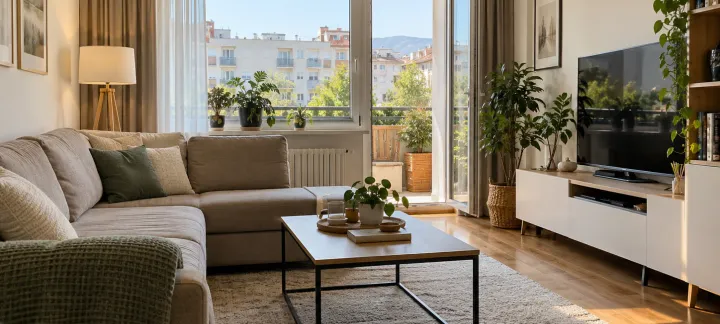
Renting out a home does not end the moment a tenant is found and the keys are handed over. From that point another stage begins – the long-term management of the property and keeping it in good working condition.
For the owner, this does not mean constant repairs, regular visits or getting involved in every minor situation. Good maintenance is, above all, organisation. When there is a clear way of communicating, a timely response when needed and an agreed approach to day-to-day matters, renting out can be considerably calmer.
This is especially important in long-term rentals, where the same person or family may use the home for years. In that case the property must remain comfortable to live in, and the owner must keep control over its condition, without management turning into a second daily job.
1Maintenance is a normal part of renting out
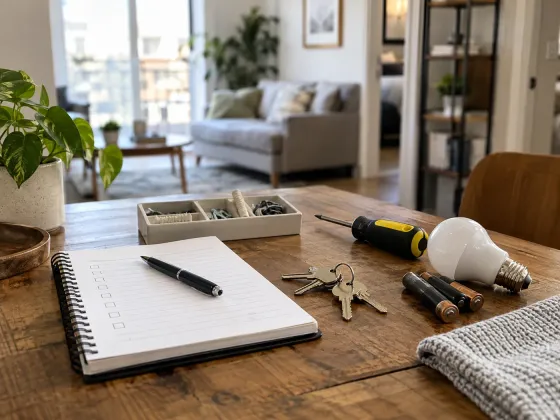
Every home is used daily. Over time, certain elements naturally wear out, appliances may need servicing, and sometimes unforeseen situations arise.
This does not mean the property is problematic.
On the contrary – such cases are a normal part of the long-term use of a home.
The difference between calm management and constant difficulties usually lies in how the owner reacts.
Good organisation includes:
- a clear point of contact between owner and tenant;
- timely reporting when a problem arises;
- judging when a specialist is needed;
- coordinating access to the home;
- tracking the more important repairs and work carried out.
This approach allows small issues to be resolved in time, before they pile up.
2What a well-maintained apartment means
A well-maintained home is not necessarily new, luxurious or furnished with the most expensive materials.
What matters more is that the essential elements work properly and the property is convenient for everyday use.
This applies both to the equipment and appliances and to the arrangement between owner and tenant.
A well-managed apartment usually has a few key characteristics:
- technical issues are not left unattended;
- communication is clear and calm;
- repairs are arranged within a reasonable time;
- the owner knows what is happening with the property;
- the tenant knows who to turn to when needed.
This predictability matters to both sides.
3Clear communication is the basis of good maintenance
Many situations in renting become complicated not because of the technical problem itself, but because of a lack of clear communication.
The tenant needs to know how to notify the owner if a question arises about the home.
The owner, in turn, needs enough information to understand what the problem is and what response is needed.
The most useful communication is specific.
Instead of a general message such as “there is a problem in the kitchen”, it is far more useful to say exactly what is not working, when it was noticed and whether the situation is changing.
That way it is much quicker to judge what comes next.
4Not every situation needs an urgent repair
One of the mistakes in managing a property is treating all technical issues as equally urgent.
In practice, there is a difference between a situation that needs a quick response and an issue that can calmly be arranged for a convenient day.
It helps to divide problems loosely into three categories.
Situations that need a quick response
This covers issues where delay can cause greater inconvenience or additional damage.
In such cases communication must be timely and arrangements should start as soon as possible.
Routine repairs
These are normal technical issues that need to be resolved but do not call for immediate action.
They can be planned for a time that suits the tenant and the specialist.
Planned work
This covers maintenance, replacement or improvements that can be arranged in advance.
Dividing situations this way prevents unnecessary tension and allows resources to be directed properly.
5It is best not to let small issues pile up
With long-term rentals, owners sometimes put off small tasks, thinking they can be dealt with later.
A single minor problem is usually not serious.
But when several pile up, the property gradually starts to lose the feel of a well-kept home.
This can cause inconvenience for the current tenant and more work for the owner at the next letting.
A better approach is to handle small technical tasks one by one.
That way maintenance stays a manageable process, instead of periodically turning into a long list of postponed repairs.
6The owner does not have to carry out every task personally
Owning a property does not mean you have to arrange every tradesperson yourself, be present at every visit or solve every technical issue on your own.
This is especially important for owners who:
- live in another city;
- live outside Bulgaria;
- have a busy daily life;
- own more than one property;
- do not want to be tied up constantly with operational tasks.
In these cases, part of the organisation can be delegated.
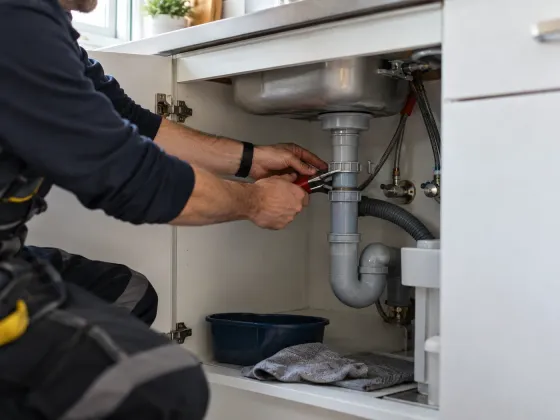
Professional property management can include coordinating the necessary repairs and maintenance, so the owner does not have to manage every individual situation personally.
7How a specialist's visit is arranged
When a repair is needed, finding the right specialist is only one part of the task.
Access to the property then has to be arranged.
It is important that the tenant knows in advance:
- who will visit the home;
- what work will be done;
- roughly when the visit will take place;
- whether they need to be present;
- whether the work is expected to take longer.
This kind of communication shows respect for the people who live in the property.
The home belongs to the landlord, but during the tenancy it is the tenant's home, and access must be arranged properly.
8Preventive maintenance is different from repairs
Maintenance should not begin only when something stops working.
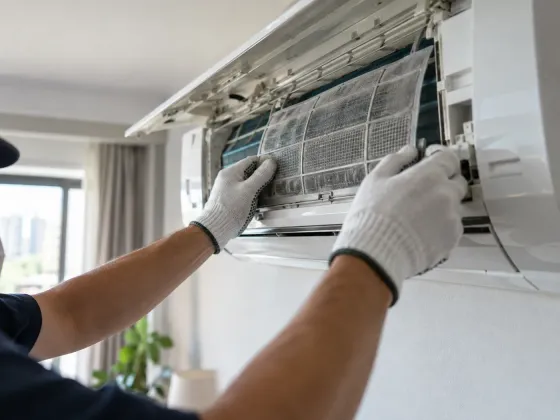
For certain appliances and systems, periodic servicing can be part of the normal care of the home.
This does not mean the owner should constantly send specialists to the property.
The aim is a sensible arrangement based on the equipment in use.
Preventive maintenance can have several benefits:
- it supports the normal operation of the equipment;
- it lets some problems be noticed earlier;
- it makes it easier to plan future costs;
- it reduces the chance of a job having to be done at the worst possible moment.
It should be practical and suited to the specific property.
9It helps to keep a short history of work done
With one apartment, the owner usually assumes they will remember when each repair was done.
After a few years, that is rarely the case.
A short history of the more important work can be extremely useful.
You do not need specialist software or a complicated system.
It can be a simple document or spreadsheet recording:
- the work carried out;
- the approximate date;
- the specialist used;
- the more significant costs;
- warranty information, where there is any.
This makes it much easier to look things up in the future.
10Warranty documents should be kept organised
When the apartment has appliances or equipment under warranty, the documents can save an unnecessary expense.
It is a good idea to keep invoices, warranty cards and service contact details in one place.
That way, if a question comes up, the owner can quickly establish whether the equipment is still within its warranty period.
Such organisation seems minor, but in the long run it makes management considerably easier.
11How maintenance affects the relationship with the tenant
A tenant does not necessarily expect never to have a technical problem.
What matters more is how it is handled when one arises.
When the owner or the person managing the property responds on time and gives clear information, the relationship usually stays calmer.
Good communication creates a sense of predictability.
This can be important for:
- long-term relationships;
- the tenant's attitude to the home;
- timely reporting of technical issues;
- reducing unnecessary tension;
- better organisation for both sides.
In this sense, maintenance is not only a technical activity. It is part of managing the relationships around the property as a whole.
12Maintenance and improvement are not the same thing
Owners sometimes confuse repair with improvement.
A repair aims to restore normal functioning to something that is already part of the home.
An improvement adds a new quality or convenience.
For example, replacing a damaged element and fully renovating a room are two different decisions.
This distinction matters when planning the budget.
Not every problem that comes up has to lead to an expensive repair or a full renovation.
The aim is first to ensure the home functions normally.
13Not every renovation should be done during the tenancy
Larger improvements can often be planned for the period between two tenants.
That way the owner has more freedom, and the current tenant is not subjected to unnecessary inconvenience.
By contrast, routine technical tasks are usually not sensible to postpone until the home is vacated.
Balance is important here.
Small functional problems are fixed on time.
More serious cosmetic changes can be planned for a suitable period.
14The period between two tenants is also part of maintenance
When one tenancy ends, the owner has a good opportunity to assess the overall condition of the home and prepare it for the next letting.
With a regularly maintained property, this process is usually much easier.
A standard clean, a refresh or a few minor tasks may be needed.
If everything has been put off for years, however, a considerable amount of work can suddenly pile up between two tenants.
This can lengthen the period in which the property earns no income.
15Good maintenance also supports the next letting
When an apartment is functional and well kept, preparing it for a new listing is easier.
When searching for properties for rent in Varna, prospective tenants compare not only the district and the area, but also the overall impression of the home.
A well-kept apartment makes a better impression from the very first viewing.
This does not mean the owner must constantly invest in expensive renovations. Cleanliness, functionality and the normal condition of the main elements matter more.
16What maintenance budget it is sensible for an owner to have
There is no universal sum that is right for every property.
Costs depend on the age of the home, the equipment, the furnishings and how it is used.
What matters more is that the owner accepts that ongoing costs can arise.
That way a necessary replacement will not be seen as a completely unexpected event.
When planning, it helps to take into account:
- the age of the appliances;
- the condition of the furnishings;
- the repairs done in recent years;
- any warranties available;
- the characteristics of the specific property.
The aim is not to forecast every future cost, but to be realistically prepared for normal maintenance.
17What changes when the owner lives abroad
For an owner outside Bulgaria, even a minor task can be hard to arrange personally.
They cannot simply visit the apartment after work or meet a specialist.
A local contact then becomes especially important.
Someone may need to:
- communicate with the tenant;
- arrange a visit;
- provide access;
- follow up on the work done;
- pass the information on to the owner.
In a situation like this, professional management can significantly reduce day-to-day commitments.
18And when the owner has several properties
Managing a single apartment can be relatively easy.
With three, five or more properties, the tasks multiply.
Different tenants may have questions at different times, the appliances are of different ages, and repairs have to be tracked separately.
Systematic organisation then becomes even more important.
It helps to have information on each property about:
- the current tenant;
- the main equipment;
- the repairs carried out;
- the key contacts;
- upcoming work.
This allows the portfolio to be managed as a system, rather than as a series of random tasks.
19The owner does not need to treat every wish as a problem
Good communication does not mean every request is automatically accepted as a necessary repair.
Sometimes it is a matter of the tenant's preference, not a technical necessity.
It is therefore useful first to understand the specific situation.
The owner can then judge whether it is a matter of:
- necessary maintenance;
- normal wear and tear;
- a technical fault;
- a desirable improvement;
- a change the tenant personally prefers.
This distinction allows decisions to remain sensible and consistent.
20What a practical maintenance management model looks like
The process does not need to be complicated.
For one or several apartments, a relatively simple model can work.
Step One: A Clear Communication Channel
The tenant knows who to turn to with a question.
Step Two: Clarifying the Situation
Enough information is gathered before a visit is arranged.
Step Three: Setting the Priority
It is assessed whether the task is urgent, routine or planned.
Step Four: Organisation
If needed, a specialist is chosen and a suitable time is agreed.
Step Five: Follow-Up
After the work is done, it is confirmed that the issue has been resolved.
Step Six: Record-Keeping
The more important work is added to the property’s history.
This system is simple enough not to create unnecessary bureaucracy, yet it maintains good organisation.
21When Professional Management Makes Sense
Not every property necessarily needs outside management.
An owner who lives nearby, has the time and is comfortable with day-to-day organisation can successfully manage their home themselves.
Professional help becomes especially practical when:
- the owner lives far away;
- there is no time for day-to-day communication;
- they manage several properties;
- they prefer not to coordinate repairs personally;
- they want a single main point of contact.
In that case, management doesn’t replace the owner’s decisions; it reduces their operational commitments.
22Long-Term Care Preserves the Property’s Functionality
A rental apartment should be seen as a home that is used every day.
It is normal for certain elements to wear out over time.
The aim of good maintenance is not for the property to look freshly finished all the time.
What matters more is that it stays:
- functional;
- clean;
- comfortable;
- well organised;
- ready for normal long-term occupancy.
This is a far more sustainable model than periodic major renovations after years without ongoing care.
23Maintenance Shouldn’t Become a Second Job
Real estate can bring long-term value and income, but that doesn’t mean the owner should be constantly tied up with small operational tasks.
When there is a clear system, many situations can be resolved calmly and consistently.
If necessary, part of the organisation can be delegated to a professional team.
If you own a rental apartment in Varna and want to discuss a more convenient way to manage it day to day, you can get in touch with the NOV VEK team.
Good maintenance doesn’t mean constant repairs. It means managing the property so that small issues are resolved in good time, the owner has clarity and the tenant has a normal, well-organised living environment.
Comments
There are no comments yet. Be the first to share what you think about the article.